How to Check Your Free CIBIL Score Online (RBI One Free Report Per Year)
Before you apply for a home loan, personal loan or credit card, the smartest 10 minutes you can spend is checking your own credit report — for free. Under RBI’s credit-information company (CIC) framework, every individual whose score is available is entitled to one Free Full Credit Report (FFCR), including the credit score, from each CIC once in a calendar year (January–December). That is the official answer to how to check free CIBIL score without paying an app subscription.
This PaiseSamjho guide sticks to verified rules from the RBI Credit Information Companies Directions and TransUnion CIBIL’s own free CIBIL score & report page. We also explain how to rotate the other three CICs, why a self-check does not hurt your score, and what to do when the report has an error — including the path covered in our note on CIBIL compensation ₹100 per day. If you already know the common score-killers, pair this HOW-TO with CIBIL Score Kaise Badhaye — 10 mistakes.
What RBI’s free full credit report (FFCR) actually means
An FFCR is not a teaser score card. Under the RBI CIC Directions, each Credit Information Company must provide individuals (whose credit information / score is available) one Free Full Credit Report including the credit score, once anytime during a calendar year. The link for that free report must sit on the CIC’s homepage — so you should not need to dig through marketing funnels for the statutory free path.
India has four CICs licensed by RBI:
- TransUnion CIBIL
- Experian
- CRIF High Mark
- Equifax
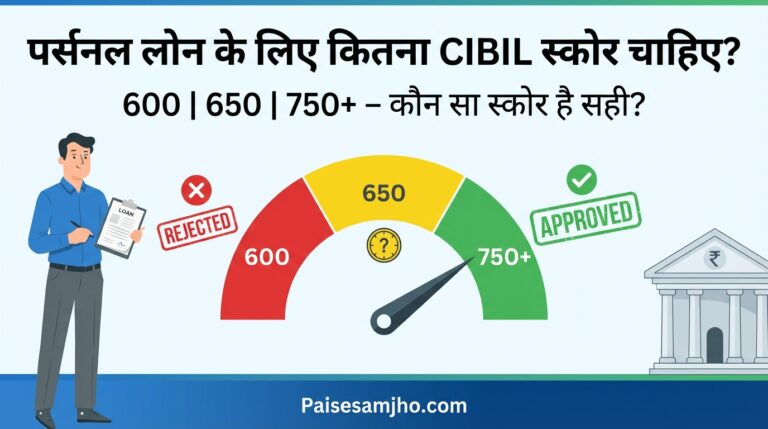
Each of them must honour the same calendar-year free entitlement. The score scale used across CICs is calibrated on the familiar 300–900 range. Lenders may subscribe to one or more CICs, so the number you see on CIBIL may not be identical to Experian on the same day — but the free-report right is parallel.
Think of FFCR as your annual “full medical” for credit: accounts, repayment history, enquiries, utilisation and the score itself — not just a three-digit teaser behind a paywall.
How often is free? Calendar year vs subscription myths
The free entitlement is once per calendar year — that is, January to December — not “once every 365 days from your last login,” and not “once per financial year.” TransUnion CIBIL’s free-score page states the practical consequence clearly: if you have already availed the free score & report on or after 1 January 2026, the next free report on that channel becomes available on 1 January 2027.
Common myths to ignore:
- “CIBIL is always free monthly on my bank app.” Many bank / fintech apps show a refreshed score as a value-add. That is a commercial product relationship, not the RBI FFCR. Use it, but do not confuse it with your statutory annual full report.
- “I already paid once, so free is gone forever.” Paid pulls and FFCR are different buckets. Using a subscription does not cancel your calendar-year FFCR right at the CIC’s free portal — check that CIC’s freecibil / FFCR flow for the year.
- “Financial year (April–March) resets the free report.” RBI’s framing for FFCR is the calendar year.
If you need more than one deep look in the same calendar year without paying, the lawful free path is to rotate CICs — one FFCR from CIBIL, one from Experian, one from CRIF, one from Equifax — not to hammer the same free link weekly.
Step-by-step — check free CIBIL at cibil.com/freecibilscore
Official entry point: https://www.cibil.com/freecibilscore. Prefer typing the URL or opening it from CIBIL’s homepage rather than random “free CIBIL” ads.
- Open the free CIBIL score & report page on a private device and network you trust.
- Start the free annual report flow (wording on the page may say Free CIBIL Score / Free Full Credit Report).
- Enter identity details as asked — typically PAN, name as on PAN, date of birth, and a mobile number that can receive OTP.
- Complete OTP / authentication challenges. Some flows also ask identity or “out-of-wallet” questions based on your credit file.
- When authenticated, view your score and open / download the full CIR (Consumer Information Report / credit information report).
- Save a PDF copy and note the date. That timestamp matters if you later dispute an error or claim delay compensation.
If the page says you have already consumed the free report for calendar year 2026, do not keep retrying the same free link. Either wait for 1 January 2027, use a paid product if you truly need another CIBIL pull, or take your free FFCR from another CIC.
PAN, OTP and identity questions
PAN is the backbone of most retail credit files in India. Keep the name and DOB aligned with your PAN and Aadhaar records; mismatches are a common reason free flows fail or create duplicate-looking profiles. Use your own mobile number — OTP to a friend’s phone is how accounts get hijacked.
Identity questions (old loan amounts, past addresses, EMI ranges) are meant to prove you are the consumer on the file. Answer from memory or from your own statements; do not share OTPs or full report screenshots in WhatsApp groups.
Download score + full CIR
A score without the report is half the story. The full CIR shows:
- Active and closed loan / credit-card accounts
- Payment history and overdue flags
- Credit enquiries (who pulled your file)
- Utilisation on revolving accounts
- Personal information as reported by lenders
Download and archive it. Before any large loan, re-read the enquiry and overdue sections carefully — that is where surprises hide. For decision-framing before you borrow, see Loan Tips: five questions to ask yourself.
Other free annual reports (Experian, CRIF, Equifax) — rotate smartly
RBI’s one-free-FFCR-per-calendar-year rule applies to each CIC. So in one calendar year you can lawfully obtain up to four free full reports — one from each bureau — if your score / information is available with them.
A practical rotation for serious borrowers:
- Q1: Free CIBIL FFCR (many lenders still lean heavily on CIBIL)
- Q2: Free Experian FFCR
- Q3: Free CRIF High Mark FFCR
- Q4: Free Equifax FFCR
Use each report to spot inconsistencies (a closed loan still showing active on one bureau, an enquiry missing on another). Fix errors at the source lender and through the relevant CIC dispute channel. Do not assume “CIBIL is fine, so all bureaus are fine.”
Does checking your own score hurt CIBIL? Soft vs hard enquiry
CIBIL’s own FAQ position (and standard industry practice) is that checking your own score / report does not impact your score. That self-view is treated as a soft / consumer pull, not a lender hard enquiry.
Hard enquiries happen when you apply for credit and a lender pulls your file for underwriting. Many hard enquiries in a short window can look like credit-hungry behaviour — one of the classic mistakes covered in our CIBIL mistakes guide.
Also remember: a score typically needs an active loan or credit card reported in the last 36 months. If you are a pure cash user with no recent credit lines, you may see “score not available” even though FFCR rights exist for individuals whose information / score is available.
What your report shows (accounts, enquiries last 36 months, utilisation)
Read the CIR like a bank officer would:
- Accounts: Are all loans yours? Any “settled” or “written off” flags you did not expect?
- Enquiries: Review roughly the last 36 months of enquiry history shown on the report. Unknown lender names deserve a closer look.
- Utilisation: High revolving balances versus limits hurt scores even when you pay the minimum due.
- Personal data: Wrong address or phone can delay OTP-based loan journeys.
Illustrative teaching example (not a live score model): if your card limit is ₹1,00,000 and statement balance is ₹75,000, utilisation is 75% — lenders often prefer much lower utilisation. Paying down to ₹30,000 drops utilisation to 30% on that simple arithmetic. Exact score impact varies; the report itself is what you verify for free.
Spot errors — how to raise a dispute
Reporting errors happen: a closed loan still open, a payment not updated, an account that is not yours. Process in order:
- Screenshot / PDF the error page from your FFCR.
- Raise a dispute on the CIC’s dispute portal for that bureau.
- Also write to the lender / bank that reported the data — they own the source feed.
- Track timelines. If correction / updation is delayed beyond the framework’s timelines, read our explainer on ₹100 per day compensation and keep complaint numbers handy.
Primary RBI references for CIC conduct include the Master Directions linked above and related notifications such as RBI Notification Id=12553 on the notification archive — always open the live circular text before you escalate.
When you still need a paid / monthly check
FFCR is excellent for deep annual hygiene. You may still want a paid or bank-app refresh when:
- You are mid-loan-shopping and need frequent score looks after fixing utilisation
- You disputed an error and want confirmation before the next calendar-year free pull
- Your bank’s relationship score widget is convenient and clearly labelled as a commercial product
Paying does not replace reading the full report. A green “750” badge without CIR detail is marketing, not underwriting.
Checklist before applying for a loan or credit card
- Take your free CIBIL FFCR (or confirm you already took it this calendar year).
- Scan enquiries, overdues, and utilisation.
- Dispute clear errors; wait for correction before applying.
- Avoid stacking multiple hard applications in one week.
- Ask yourself the affordability questions in our loan tips article.
- If another CIC is free this year, pull it too for a second opinion.
FAQs
1. How to check free CIBIL score officially?
Use TransUnion CIBIL’s free annual flow at cibil.com/freecibilscore, authenticate with PAN / OTP, and download the full report. That is the FFCR path aligned with RBI’s one-free-report-per-calendar-year rule for each CIC.
2. Is the free CIBIL report RBI FFCR the same as a bank-app score?
Not necessarily. FFCR is the statutory free full report from the CIC. Bank or fintech score widgets are usually commercial refresh products. Both can be useful; only FFCR is the RBI-mandated free full report entitlement.
3. How many free reports can I get in one calendar year?
One free FFCR from each CIC per calendar year (January–December), if your information / score is available with that CIC. Four CICs ⇒ up to four free full reports if you rotate.
4. I took free CIBIL after 1 Jan 2026 — when is the next free one?
Per CIBIL’s free-score page framing, the next free report on that channel is available from 1 January 2027.
5. Does a self-check reduce my score?
No. Checking your own score / report does not impact the score per CIBIL’s FAQ position. Lender hard enquiries from applications are a different matter.
6. Why is my score not available?
Scores generally need an active loan or credit card reported in the last 36 months. Thin files may show report data without a classic 300–900 score.
7. What score range does CIBIL use?
The familiar 300–900 scale, with the same calibration required across CICs under the Directions framework.
Takeaway
RBI requires each CIC to give you one free full credit report including score anytime in a calendar year, with the link on the homepage. For CIBIL, start at cibil.com/freecibilscore, authenticate carefully, download the full CIR, and rotate Experian / CRIF / Equifax for extra free views the same year. Self-checks do not hurt your score; messy hard enquiries and unfixed report errors do. Use the free report before every major credit application — and fix disputes early.
Disclaimer: This article is for educational purposes only. It summarises publicly described RBI CIC Directions and CIC free-report practices as of the research date (24 Sep 2026 IST). It is not credit, legal or financial advice. Always verify the live free-report flow, eligibility and dispute timelines on the CIC website and RBI circulars before you act.