Digital Arrest Scam: How It Works, Warning Signs and What to Do
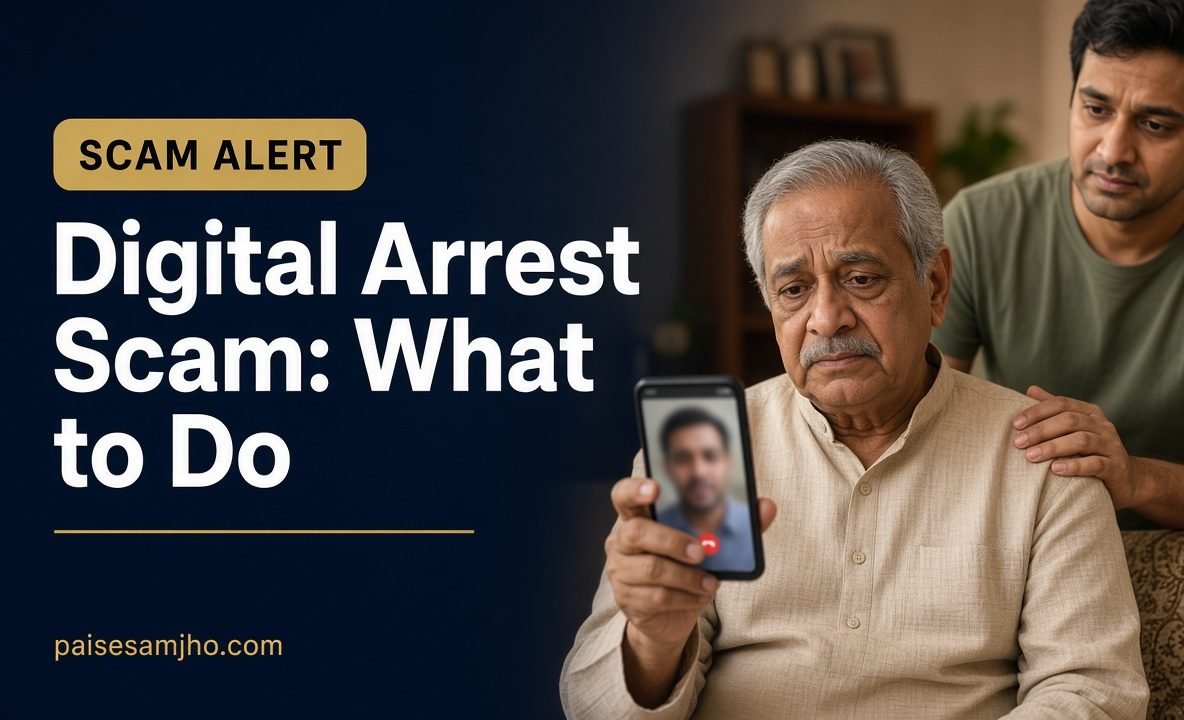
The call usually starts with a parcel. A voice claiming to be from a courier company says a package in your name has been seized with drugs or fake passports. Within minutes you are “transferred” to someone in a police uniform on a video call, told you are under “digital arrest”, and ordered not to leave the camera or tell anyone. Then comes the demand for money to “settle the case”. The digital arrest scam has cost Indians large sums, and this guide explains how it works, the warning signs, and exactly what to do if you or a family member gets that call.
The short answer first: there is no such thing as a “digital arrest” in Indian law. No police officer, CBI official, customs officer, RBI official or judge will arrest you over a video call or ask you to transfer money to prove your innocence.
What is a digital arrest scam?
The Ministry of Home Affairs described the pattern in a public alert released through the Press Information Bureau (PIB) on 14 May 2024. According to the alert, fraudsters pose as police, the CBI, narcotics officials, the Reserve Bank of India, the Enforcement Directorate and other agencies. They typically tell the victim that:
- a parcel sent by or addressed to them contains illegal goods, drugs, fake passports or other contraband; or
- a close relative has been caught in a crime or an accident and is “in custody”.
Money is then demanded to “compromise” the case. In some cases, the alert says, victims are made to undergo “digital arrest” and remain visible on Skype or another video platform until the demands are met. The fraudsters use studios made to look like police stations and government offices and wear uniforms to appear genuine.
MHA calls it “an organized online economic crime” that is “learnt to be operated by cross-border crime syndicates”. The Indian Cyber Crime Coordination Centre (I4C) says it has blocked more than 1,000 Skype IDs used for such calls, working with Microsoft, and is helping to block SIM cards, mobile devices and mule bank accounts used by the gangs.
How the digital arrest scam unfolds, step by step
| Stage | What the scammer does | What it is meant to achieve |
|---|---|---|
| 1. The hook | An automated or live call about a seized parcel, a SIM card “used in crime”, a money-laundering case or a relative in trouble. | Shock and fear, before you can think. |
| 2. The “transfer” | You are passed to a fake police officer or “senior official”, often on a video call. | Authority. Uniforms, badges and office backgrounds look convincing. |
| 3. Isolation | You are told the case is “confidential”, that you must not hang up, and must not tell family. | Stop anyone from telling you it is a scam. |
| 4. Fake paperwork | Forged arrest warrants, court orders or RBI letters are sent on WhatsApp. | Make the threat feel official. |
| 5. The demand | You are asked to move money to a “safe” or “verification” account, pay a “fine”, or share bank details and OTPs. | Take the money, usually through a chain of mule accounts. |
| 6. Repeat | If you pay once, more demands follow, sometimes for days. | Drain savings, FDs and even loans. |
Pattern based on the MHA/I4C alert; the stages vary from case to case.
Why the scam works on smart people
Victims of this fraud are often well educated and careful with money. The scam works because it attacks judgement, not knowledge. Fear of arrest, shame about a “case” involving drugs or money laundering, and respect for authority all push people to obey. Keeping the victim on camera for hours, sometimes overnight, adds exhaustion. Telling them to keep it secret removes the one thing that breaks the spell: a calm second opinion.
Knowing this helps. If you ever feel panic during a call from an “official”, treat the panic itself as a warning sign. Real legal processes allow time, paperwork and a lawyer. A demand to act within minutes does not.
What genuine police contact usually looks like
Police and investigating agencies do contact people about real cases, but the process looks very different. You would normally receive a written notice or summons, which you can verify by calling the police station or agency office on a number from its official website. You can ask for the officer’s name, rank and station, and you have the right to consult a lawyer. At no stage will a genuine officer ask you to transfer money to a personal or “verification” account, or to keep the matter secret from your family.
Warning signs that it is a digital arrest scam
- Arrest over video. Real arrests do not happen on WhatsApp, Skype or any video call.
- Demand for money. No investigating agency asks you to transfer money to “clear your name” or to a “safe account” for checking.
- Secrecy. Being told not to tell your family, lawyer or bank is a red flag.
- Urgency. Threats of immediate arrest, account freezing or jail if you disconnect.
- Documents on WhatsApp. Agencies do not serve warrants or court orders by chat message.
- Requests for OTPs, PINs or remote access. No official needs your UPI PIN, card CVV, net banking password or a screen-sharing app.
What to do if you get a digital arrest call
- Hang up. You are not obliged to stay on a call with anyone who says you are under arrest over video. Disconnecting is safe.
- Do not pay or share anything. No money, OTP, Aadhaar number, bank details or photos of documents.
- Tell someone you trust. Scammers rely on isolation. A family member or friend can help you think clearly.
- Check independently. If you are worried that a real case exists, call your local police station using a number you find yourself, not one given by the caller.
- Report the call. MHA advises citizens to report such calls on the cybercrime helpline 1930 or at cybercrime.gov.in. You can also report suspected fraud calls and messages through the government’s Chakshu facility on the Sanchar Saathi portal.
- Save evidence. Take screenshots of the caller’s number, profile, messages and any documents they sent.
If you have already sent money
Speed matters most. The sooner a complaint is registered, the better the chance that money can be put on hold in the accounts it passed through.
- Call 1930 immediately or file a complaint at cybercrime.gov.in. Note the acknowledgement number.
- Call your bank’s fraud helpline and ask it to block further debits from your account, cards and UPI. Report the transaction as fraud.
- Give the bank the details: the date, time, amount, UTR or transaction reference, and the beneficiary account or UPI ID.
- File a police complaint at your local station or cyber cell with the evidence.
- Follow up in writing with your bank, quoting the complaint number.
Under RBI’s rules on customer liability, how much you lose depends on whether the transaction was unauthorised and how quickly you reported it. If you authorised the transfer yourself under pressure, the bank may treat it differently from a transaction made without your knowledge. Our guide to zero liability for unauthorised transactions explains the timelines, and if the bank does not respond within 30 days you can approach the RBI Ombudsman.
If you later find that your own bank account has been frozen because scam money passed through it, see our guide on what to do when cyber police freeze an account.
Who is most at risk
Anyone can be targeted. Cases reported in the media have often involved:
- Senior citizens, who may live alone, have savings in FDs and are less familiar with video-call tricks.
- Professionals with good incomes, such as doctors and engineers, who are threatened with damage to their reputation.
- Young adults living away from home, whose parents are told their child has been arrested.
If you have elderly parents, explain the scam to them in simple words and agree on a family rule: no money moves after a frightening call until someone else in the family has been told. Our guide on banking rights for senior citizens also covers safer ways for them to bank.
Steps that make you a harder target
- Lower your daily transfer limits in your banking app, and raise them only when needed.
- Keep FDs and savings in a separate account without UPI linked, so a single pressured transfer cannot empty everything.
- Turn on transaction alerts by SMS and email for every account.
- Do not install screen-sharing or remote-access apps at a caller’s request.
- Restrict who can see your phone number and profile photo on messaging apps, and do not accept video calls from unknown numbers.
- Talk about it. Families that discuss scams openly are less likely to fall for them.
Share this guide with older relatives and anyone who lives alone. One conversation in advance can stop a frightening call from turning into a financial loss.
FAQs
Is digital arrest legal in India?
No. There is no provision for arresting anyone over a video call. Police must follow legal procedure, and an arrest involves physical custody and the rights that come with it.
Can the CBI or police call me on WhatsApp video?
Officials may contact people by phone in some situations, but they will not “arrest” you over a video call, demand money, or ask you to keep it secret. If in doubt, hang up and call your local police station yourself.
What is the cybercrime helpline number?
1930. You can also file a complaint online at cybercrime.gov.in.
Will I get my money back?
Possibly, if it is reported quickly and the money can be traced and frozen. Recovery is not certain, and it often takes time through police and court processes.
Takeaway: A digital arrest scam relies on fear, secrecy and speed. No agency arrests anyone over a video call or asks for money to close a case. Hang up, tell family, and report it on 1930 or cybercrime.gov.in, at once if money has left your account.
Official sources
- PIB (MHA): alert against “digital arrest” and blackmail by cyber criminals, 14 May 2024
- National Cyber Crime Reporting Portal
- Indian Cyber Crime Coordination Centre (I4C)
- Sanchar Saathi (Chakshu fraud reporting)
Last verified: 3 Nov 2026, 8:25 PM IST, against the MHA alert on digital arrest published by PIB on 14 May 2024 and the National Cyber Crime Reporting Portal. Liability rules follow RBI’s 2017 customer protection circular. Scam patterns change; this is general guidance, not legal advice.