Big Billion Days 2026 Bank Offers vs Amazon SBI Deal: Which Card Saves More?
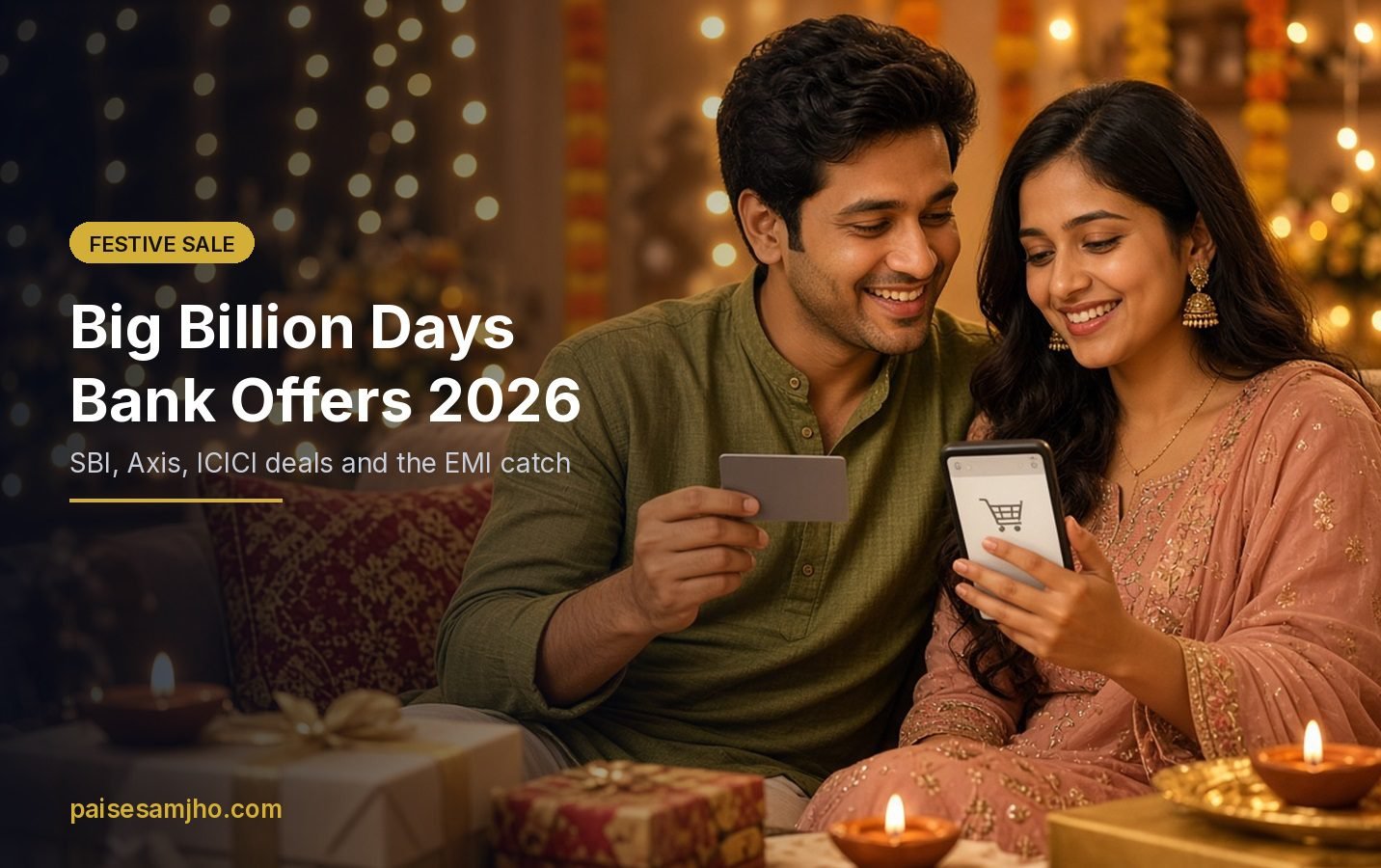
Every October my cousin in Jaipur does the same thing. He opens both apps, puts a phone in the cart on each, and then spends two evenings asking the family group which card gives the bigger discount. This year he’s already started, and the question is Big Billion Days 2026 bank offers versus Amazon’s SBI deal. Both sales kick off within a day of each other, on 8 and 9 October, and both are pushing 10% instant discounts through partner banks. The catch is in the fine print, and in what happens to your credit card bill in November.
This piece looks at the sales the way a personal-finance person would. Which banks are officially confirmed, which ones are only reported so far, how “no cost EMI” really works, and when a discount ends up costing you more than it saves.
Big Billion Days 2026 bank offers and sale dates: what’s officially confirmed
Amazon has confirmed on its official India news page that the Great Indian Festival starts on 8 October 2026. Early deals are already live.
Flipkart’s 16 September announcement confirms that Big Billion Days 2026 begins with early access on 8 October. The press release doesn’t give the main sale date or name the bank partners. TOI’s Gadgets Now and PCQuest report that the sale opens to everyone on 9 October, with early access for Flipkart Plus and Black members a day earlier.
Big Billion Days 2026 bank offers: Axis and ICICI (reported)
Here’s what’s out there so far. According to Gadgets Now and PCQuest, Flipkart’s Big Billion Days 2026 bank offers include a 10% instant discount on Axis Bank and ICICI Bank credit and debit cards. That’s consistent with how Flipkart has run recent sales, but as of 28 September, Flipkart hasn’t put these banks on its own press page. Until Flipkart’s sale page lists them, the Big Billion Days 2026 bank offers should be treated as reported. They could still change.
What we don’t know yet matters as much. Neither company has published the maximum discount per card, the minimum order value, or whether the offer applies per transaction or per card for the whole sale. In past years these caps have made a big difference. A “10% off” on a ₹60,000 laptop sounds like ₹6,000, but if the cap is lower than that, you get the cap and nothing more. The sale pages usually go live with full terms a day or two before the event, so check the offer terms on the product page before paying.
Amazon Great Indian Festival 2026 SBI card offer
This one is official. The Amazon Great Indian Festival 2026 SBI card offer gives a 10% instant discount on SBI credit cards, SBI debit cards and EMI transactions. Amazon’s announcement also mentions a few other payment perks:
The Amazon Pay ICICI Bank credit card earns 5% unlimited cashback for Prime members and 3% for non-Prime members. Amazon Pay Later offers three interest-free instalments on carts of ₹1,500 or more. And Prime members get up to 10% extra on some deals. Amazon hasn’t posted the SBI discount cap or minimum order value yet either.
Worth noticing: the SBI offer covers debit cards too. If you don’t have a credit card, or don’t want to use one, you can still get the instant discount by paying with an SBI debit card, as long as the product page lists it.
Instant discount vs cashback: which is actually better?
They sound similar. They aren’t, quite.
An instant discount comes off the price at checkout. You pay less right away, and if you return the item, the discount simply reverses. A cashback, like the Amazon Pay ICICI card’s 5%, lands later, usually with your statement or as Amazon Pay balance. It has real value, but only if you’d have spent that balance anyway.
Let’s run the numbers on a ₹40,000 phone. With a 10% instant discount (assuming the cap allows the full amount), you pay ₹36,000. With 5% cashback, you pay ₹40,000 now and get ₹2,000 back later. The instant discount wins by ₹2,000. The two sometimes stack, though, depending on the offer terms, so read carefully before assuming you can only have one.
How “no cost EMI” really works during a festive sale
This is the part people get wrong most often. A no cost EMI isn’t interest-free in the way it sounds. The bank still charges interest. The seller or platform gives you an upfront discount equal to that interest, so the total instalments add up to the product price.
But two things usually still cost you money.
The first is GST on the interest. The bank charges 18% GST on the interest part of each EMI, and the discount doesn’t cover that. The second is a processing fee that some banks charge on EMI conversion. It’s a flat amount, often a few hundred rupees plus GST.
A worked example
Say you buy a ₹30,000 phone on a six-month no cost EMI, and the card’s EMI interest rate is 15% a year. The interest over six months comes to about ₹1,326. The platform knocks that ₹1,326 off the price, so your six EMIs add up to ₹30,000. So far so good.
Now add 18% GST on ₹1,326, which is about ₹239. If the bank also charges, say, a ₹199 processing fee plus GST, that’s another ₹235. Your real cost is around ₹30,474, not ₹30,000. It’s a small amount, though “no cost” is a generous label for it.
There’s a hidden trade-off too. On some listings, choosing no cost EMI means you don’t get the instant bank discount, or you get a smaller one. On a ₹30,000 phone, a 10% instant discount is ₹3,000. Losing that to save ₹1,326 of interest would be a bad deal. Compare the final price under both options before you tap pay.
Best credit card for festive sale 2026: how to choose
There’s no single best credit card for festive sale shopping, because it depends on which platform you’ll use and how much you’ll spend. A rough way to think about it:
If you mostly buy on Amazon, an SBI card (credit or debit) gets the headline discount, and the Amazon Pay ICICI card works well for everyday cashback outside the sale. If you mostly buy on Flipkart, the reported Axis and ICICI offers are the ones to watch, subject to confirmation. If you’re thinking of applying for a new card just for the sale, don’t. A fresh application adds a hard enquiry to your credit report, and the card may not arrive in time anyway.
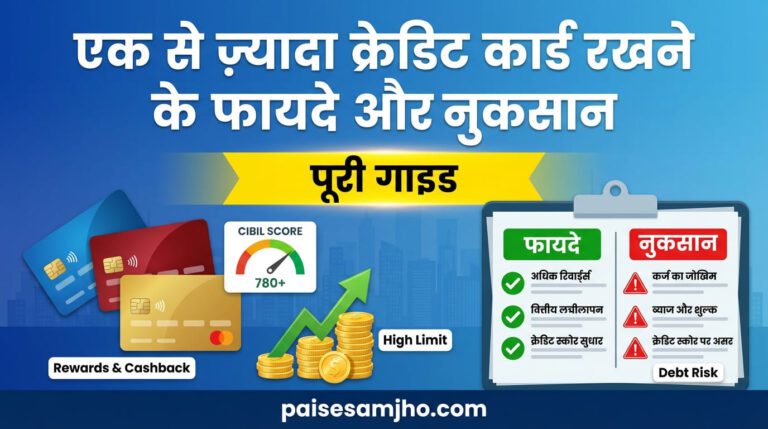
Holding one card from each of the partner banks can make sense for heavy shoppers, but it has costs. We’ve written separately about the pros and cons of having more than one credit card. And if you don’t qualify for a regular card, an FD-backed credit card can get you into the SBI offer.
When a debit card beats a credit card
More often than you’d think. If you tend to carry a balance on your credit card, even for a month, the interest wipes out any festive discount. Many cards charge around 3.5% a month on unpaid balances, which works out to well over 40% a year. Here’s how credit card interest is calculated if you’ve never looked closely.
Take a ₹50,000 TV bought on a credit card with a ₹5,000 instant discount. You pay ₹45,000. If you can only clear ₹15,000 when the bill comes, the remaining ₹30,000 at 3.5% a month adds about ₹1,050 in interest in the first month alone, plus GST on that interest. Two or three months of that and the discount is mostly gone. With an SBI debit card on Amazon, you’d get the same 10% off and no interest risk at all, as long as the money is in your account.
How festive shopping affects your CIBIL score
Your credit score looks at how much of your card limit you use. A common rule of thumb is to stay under 30% of the limit. If your card limit is ₹1 lakh and you put ₹70,000 of Big Billion Days shopping on it, your utilisation jumps to 70% for that billing cycle. Your score can dip, even if you pay in full on time.
EMI conversions add another wrinkle. When you convert a purchase to EMI, the bank blocks that amount from your available limit until you repay it. So a ₹60,000 laptop on a 12-month EMI keeps a big chunk of your limit tied up for a year. If you’re planning to apply for a home loan or personal loan in the next few months, that matters. Our guide on checking your CIBIL score for free shows how to see where you stand before the sale.
If a home purchase is on your list for next year, see our note on home loan eligibility by salary. Existing EMIs directly shrink how much a bank will lend you.
A simple plan for the sale week
Whether you’re chasing Big Billion Days 2026 bank offers or Amazon’s SBI deal, the routine is the same. Before 8 October, make a list of what you actually need and the price you’d be happy to pay. Check whether you hold an SBI, Axis or ICICI card, and what your available limit is. On the day, compare the final price with instant discount against the no cost EMI option on the same product. Pay the full bill by the due date.
FAQ: Big Billion Days 2026 bank offers
Which banks are part of Big Billion Days 2026 bank offers?
Axis Bank and ICICI Bank, with a 10% instant discount, according to Gadgets Now and PCQuest. Flipkart hadn’t confirmed the banks on its press page as of 28 September.
Does the Amazon SBI offer work on debit cards?
Yes. Amazon says the 10% instant discount applies to SBI credit cards, debit cards and EMI transactions.
Is no cost EMI really free?
Not fully. You usually pay 18% GST on the interest component, sometimes a processing fee, and on some listings you give up the instant discount.
What’s the maximum discount I can get?
Neither platform has published the caps yet. They normally appear on the offer page just before the sale.
Should I get a new credit card for the sale?
Probably not. The application adds a hard enquiry, and approval and delivery may not happen before 8 October.
Festive sales are genuinely useful if you were going to buy something anyway, and the Big Billion Days 2026 bank offers work best as a bonus on a planned purchase. We’ll update this post once Flipkart publishes its bank partners and both platforms show the discount caps, probably around 6 or 7 October.
Disclaimer: Offer details are based on official announcements and media reports available on 28 September 2026. Banks and platforms can change terms at any time. This is not a recommendation to use any specific card.