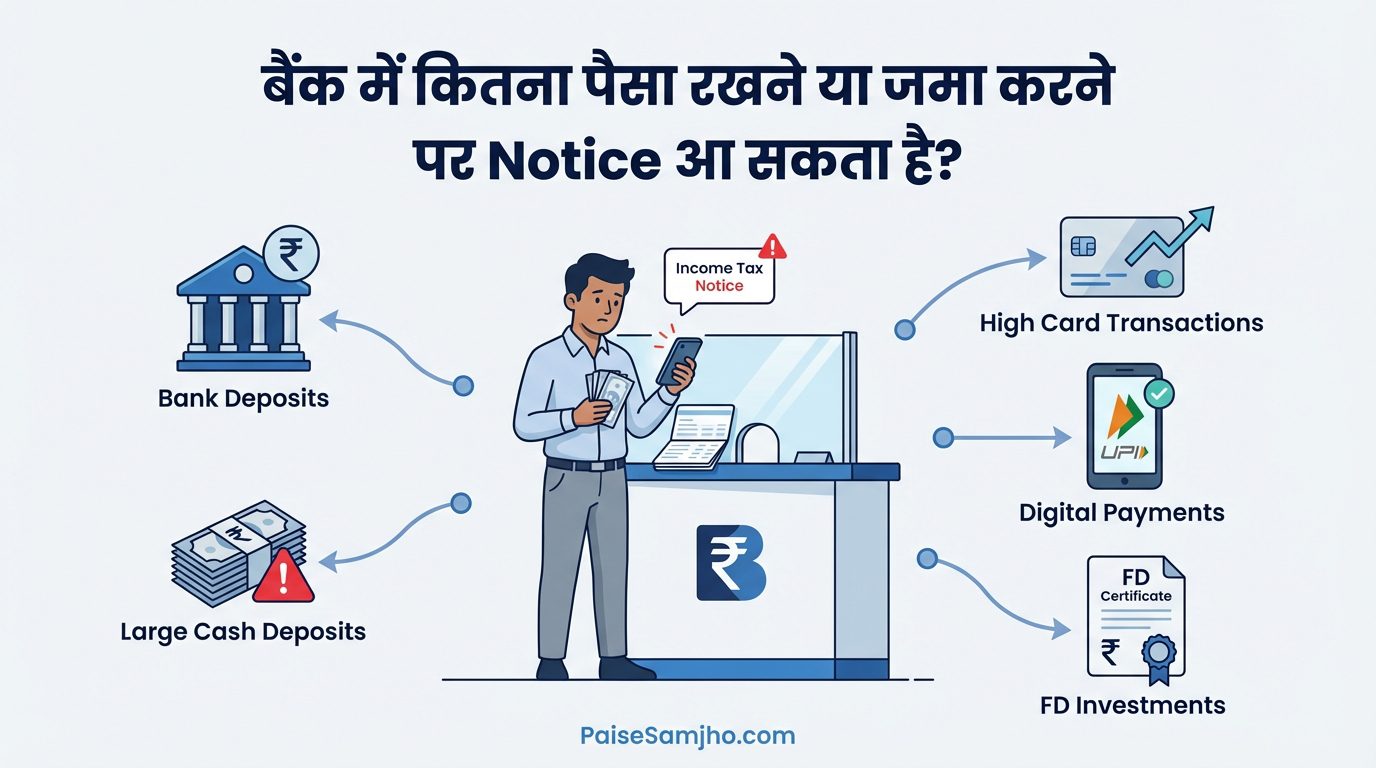
Bank Cash Deposit Rules: Bank में कितना पैसा रखने या जमा करने पर Notice आ सकता है?
आजकल बहुत से लोग यह जानना चाहते हैं कि bank account में कितना पैसा रखने या जमा करने पर Income Tax notice आ सकता है। कई बार सोशल मीडिया या YouTube पर अलग-अलग numbers बताए जाते हैं, जिससे confusion बढ़ जाता है। असल में Income Tax Department सीधे हर transaction पर notice नहीं भेजता। लेकिन कुछ high-value transactions ऐसे होते हैं जिन्हें banks और financial institutions को Income Tax Department को report करना पड़ता है। इस reporting system को Statement of Financial Transactions (SFT) कहा जाता है, जो Income Tax Act की Section 285BA और Rule 114E के तहत लागू होता है।
इस article में हम समझेंगे:
- Bank Cash Deposit Rules क्या हैं
- Bank account में पैसा रखने की क्या limits हैं
- कौन-सी transactions Income Tax Department को report होती हैं
- और किन situations में notice आ सकता है
Income Tax Department Bank Transactions को कैसे Track करता है?
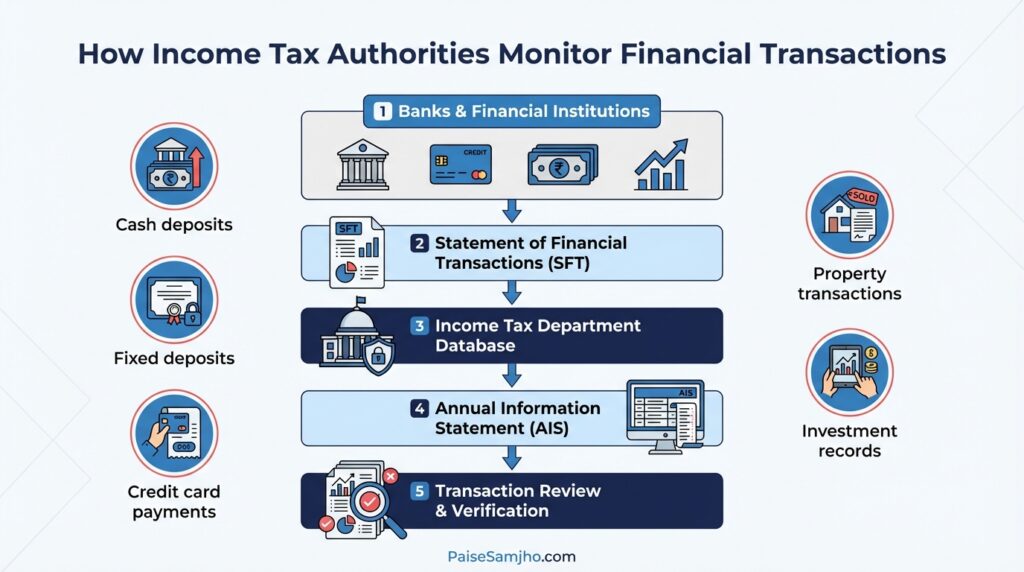
आज के समय में बैंकिंग सिस्टम काफी डिजिटल हो चुका है, इसलिए Income Tax Department के लिए financial transactions को track करना पहले से ज्यादा आसान हो गया है। इसके लिए सरकार ने एक reporting system बनाया है जिसे Statement of Financial Transactions (SFT) कहा जाता है।
जब कोई व्यक्ति या business ऐसी transaction करता है जो निर्धारित reporting threshold से ऊपर होती है, तो उस transaction की information automatically Income Tax Department के पास चली जाती है।
Rule 114E का क्या रोल है
Rule 114E of Income Tax Rules यह तय करता है कि कौन-कौन सी financial transactions report की जाएँगी और किस threshold के ऊपर reporting जरूरी होगी। इसमें कई प्रकार की transactions शामिल हैं, जैसे:
- Bank accounts में बड़ी cash deposits
- Fixed deposits या investments
- Credit card bill payments
- Property transactions
- Mutual fund investments
इन transactions की जानकारी banks और financial institutions हर साल Income Tax Department को submit करते हैं।
Savings Account में Cash Deposit Rules
Savings account में cash deposit करने पर कोई सीधी “maximum limit” तय नहीं की गई है। लेकिन कुछ बड़ी cash transactions banks को Income Tax Department को report करनी पड़ती हैं। यह reporting Income Tax Act की Section 285BA और Rule 114E (Statement of Financial Transactions – SFT) के तहत होती है।
Annual Cash Deposit Reporting Rule
Income Tax rules के अनुसार, अगर किसी व्यक्ति के savings accounts में एक financial year (1 अप्रैल से 31 मार्च) के दौरान कुल cash deposits ₹10 लाख या उससे अधिक हो जाते हैं, तो bank को इस transaction की information Income Tax Department को report करनी होती है। यह reporting एक ही account के लिए नहीं बल्कि एक ही bank में मौजूद सभी savings accounts को मिलाकर की जाती है।
Reporting का मतलब Notice नहीं होता
यह समझना जरूरी है कि ₹10 लाख cash deposit का मतलब automatic tax notice नहीं है। इसका मतलब सिर्फ इतना है कि यह transaction Income Tax Department के system में record हो जाती है। अगर आपके पास उस पैसे का valid source (salary, business income, savings, property sale, etc.) है और आपने सही तरीके से Income Tax Return (ITR) file किया है, तो आमतौर पर कोई समस्या नहीं होती।
Cash Deposits का Source Clear होना चाहिए
अगर bank deposits और आपकी declared income में बड़ा फर्क दिखाई देता है, तो Income Tax Department explanation मांग सकता है। इसलिए cash deposit करते समय यह जरूरी है कि:
- पैसे का source documented हो
- जरूरत पड़ने पर ITR, salary slips, business records या sale documents दिखाए जा सकें
इससे future में किसी भी tax enquiry या notice की स्थिति में clarification देना आसान हो जाता है।
Current Account Cash Transaction Rules
Income Tax rules के अनुसार, अगर किसी current account में एक financial year के दौरान कुल cash deposits ₹50 लाख या उससे अधिक होते हैं, तो bank को यह information Income Tax Department को report करनी होती है। यह threshold एक ही bank में मौजूद current accounts को मिलाकर लागू होती है।
अगर business की income properly declared है और books of accounts तथा ITR सही तरीके से file किए गए हैं, तो सामान्यतः कोई समस्या नहीं होती।
Current account में high cash deposits होने पर सबसे महत्वपूर्ण चीज होती है proper accounting। इसलिए businesses को चाहिए कि:
- सभी transactions books of accounts में record करें
- GST records और sales records maintain रखें (अगर applicable हो)
- हर साल accurate ITR file करें
इससे future में किसी भी tax enquiry की स्थिति में transactions का source आसानी से explain किया जा सकता है।
Credit Card Transactions Reporting Rules
Income Tax Rules के अनुसार banks या credit card companies को कुछ specific payments report करनी होती हैं:
- अगर कोई व्यक्ति credit card bill का ₹1 लाख या उससे अधिक cash में payment करता है (एक financial year में), तो यह transaction report किया जाता है।
- अगर ₹10 लाख या उससे अधिक credit card bill payment किसी भी mode (online, cheque, transfer, etc.) से किया जाता है एक financial year में, तो भी यह transaction Income Tax Department को report किया जा सकता है।
इन transactions की information financial institutions हर साल Statement of Financial Transactions (SFT) के माध्यम से Income Tax Department को भेजते हैं।
Income और Spending में Match होना जरूरी
Income Tax Department अक्सर यह भी देखता है कि credit card spending आपकी declared income के हिसाब से reasonable है या नहीं। उदाहरण के लिए: अगर किसी व्यक्ति की annual income ₹5–6 लाख है लेकिन credit card spending ₹20–25 लाख दिखाई देती है, तो department clarification मांग सकता है।
Cash Payments से बचना बेहतर
Credit card bill के लिए cash payments करने से बचना बेहतर होता है, क्योंकि large cash transactions आसानी से tax reporting system में flag हो सकती हैं। सबसे सुरक्षित तरीका है:
- Online banking या UPI से payment करना
- Transactions का proper record रखना
- Annual income के अनुसार credit card usage maintain करना
इससे future में किसी भी tax enquiry या notice की संभावना कम हो जाती है।
Property Transactions Reporting Rules
Income Tax rules के अनुसार, अगर किसी immovable property (जैसे house, flat, land) की purchase या sale value ₹30 लाख या उससे अधिक होती है, तो इस transaction की information Registrar / Sub-Registrar Office द्वारा Income Tax Department को report की जाती है।
यह rule सभी प्रकार की immovable property transactions पर लागू होता है, जैसे residential property (घर या फ्लैट), commercial property (दुकान या ऑफिस), और land या plot की खरीद-फरोख्त। इसका उद्देश्य high-value property transactions को tax system में track करना है।
Property sale या purchase करते समय यह जरूरी है कि:
- Transaction की actual value documents में सही दिखाई जाए
- Property sale से मिलने वाला capital gain ITR में declare किया जाए
- Purchase और sale से जुड़े documents सुरक्षित रखे जाएँ
अगर property transaction और declared income में mismatch दिखाई देता है, तो Income Tax Department clarification मांग सकता है। इसलिए property transactions में proper documentation और tax compliance बहुत महत्वपूर्ण होता है।
Income Tax Notice आने पर क्या करना चाहिए
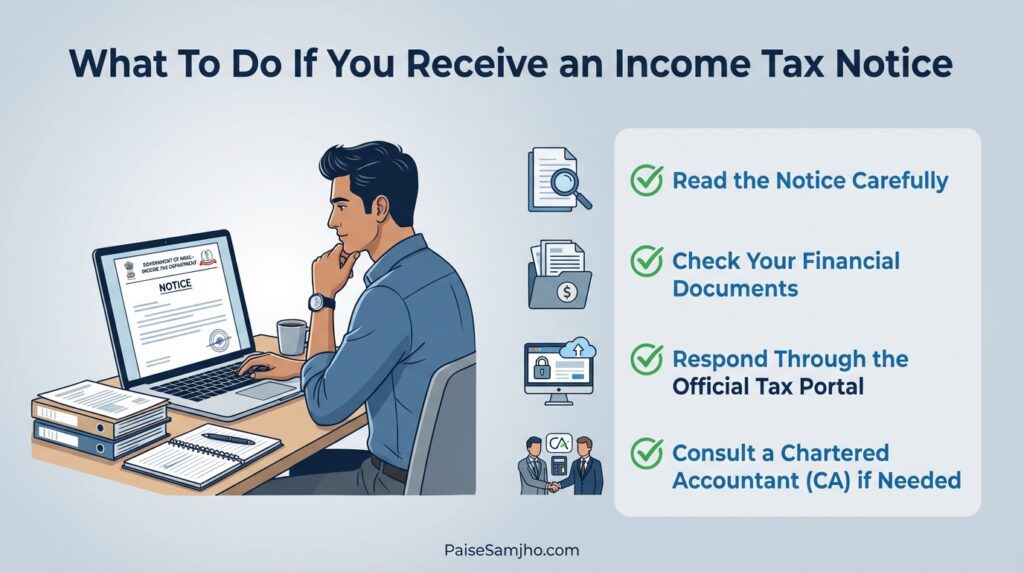
अगर आपको Income Tax Department से notice मिलता है, तो घबराने की जरूरत नहीं है। अक्सर notices information mismatch, clarification या verification के लिए भेजे जाते हैं। सही तरीके से और समय पर जवाब देने से समस्या आसानी से हल हो सकती है।
1. Notice को ध्यान से पढ़ें
सबसे पहले notice को ध्यान से पढ़ें और समझें कि department ने किस transaction या information के बारे में clarification मांगा है। Notice में आमतौर पर section, reason और reply करने की deadline दी होती है।
2. Documents तैयार रखें
Notice का जवाब देने से पहले संबंधित documents तैयार करें, जैसे
- Bank statements
- Income Tax Return (ITR) copies
- Salary slips / income proof
- Property documents
- Investment proofs
ये documents transaction के source और legitimacy को समझाने में मदद करते हैं।
3. Income Tax Portal पर Reply करें
अधिकांश notices का जवाब official Income Tax e-filing portal पर online दिया जा सकता है। Login करके notice section में जाकर required details और documents upload किए जाते हैं।
4. जरूरत पड़े तो CA की सलाह लें
अगर notice complex हो या amount बड़ा हो, तो Chartered Accountant (CA) या tax professional की मदद लेना बेहतर होता है। इससे सही और legally compliant reply दिया जा सकता है।
5. Deadline मिस न करें
Income Tax notice का reply हमेशा notice में दी गई deadline के अंदर देना चाहिए। Delay होने पर penalty या आगे की legal action की संभावना बढ़ सकती है। अगर आपके transactions सही हैं और आपके पास proper documentation है, तो अधिकांश cases में notice का reply देने के बाद मामला आसानी से resolve हो जाता है।
Income Tax Notice से कैसे बचें (Smart Tips)
Income Tax Notice से बचने का सबसे अच्छा तरीका है कि आप अपने financial transactions को transparent और properly documented रखें। नीचे कुछ practical tips दिए गए हैं जो future में unnecessary tax scrutiny से बचने में मदद कर सकते हैं।
अपनी Income के अनुसार Transactions रखें
हमेशा कोशिश करें कि bank transactions, investments और spending आपकी declared income के अनुसार ही हों। अगर income कम दिखाई गई है लेकिन transactions बहुत बड़े हैं, तो department clarification मांग सकता है।
Cash Transactions कम रखें
बहुत बड़े cash deposits या cash payments avoid करना बेहतर होता है। जहाँ संभव हो वहाँ bank transfer, UPI, cheque या digital payment methods का उपयोग करें
हर साल ITR जरूर फाइल करें
अगर आपकी income taxable limit के आसपास भी है, तब भी Income Tax Return (ITR) file करना एक अच्छा practice माना जाता है। इससे आपके income records government system में properly maintain रहते हैं।
High-Value Transactions का Record रखें
अगर आपने कोई बड़ा transaction किया है, जैसे:
- Property purchase
- Large bank deposit
- Fixed deposit investment
- High credit card spending
तो उससे जुड़े documents और proofs सुरक्षित रखें ताकि जरूरत पड़ने पर source आसानी से दिखाया जा सके।
PAN और Bank Accounts Properly Link रखें
सुनिश्चित करें कि PAN सभी major financial accounts और investments से linked हो। इससे transactions properly track होते हैं और future verification में समस्या नहीं आती।
Business और Personal Accounts अलग रखें
अगर आप business करते हैं, तो business transactions के लिए current account और personal transactions के लिए savings account अलग रखना बेहतर होता है। इससे accounting clear रहती है और tax compliance आसान हो जाता है।
इन simple practices को follow करने से अधिकांश लोगों को Income Tax notices का सामना नहीं करना पड़ता, क्योंकि उनके financial records साफ और verified होते हैं।
निष्कर्ष (Conclusion)
Bank transactions से जुड़े rules को समझना बहुत जरूरी है, क्योंकि कई financial activities की information automatically Income Tax Department को report होती है। अगर आपके transactions आपकी declared income के अनुसार हैं और आपके पास proper documents हैं, तो आमतौर पर notice आने की संभावना बहुत कम होती है। इसलिए हमेशा transparent transactions करें, records सुरक्षित रखें और समय पर ITR file करें।
यह जानकारी educational purpose के लिए दी गई है। Tax rules समय-समय पर बदल सकते हैं, इसलिए किसी भी financial decision से पहले official Income Tax website या qualified tax professional से जानकारी जरूर verify करें।
अगर आप ऐसे ही सरल भाषा में finance, banking और tax से जुड़ी जानकारी पाना चाहते हैं, तो Paise Samjho के दूसरे articles भी जरूर पढ़ें।